MEMORIST CFA restoration apprentices in Coimbra
For ten days, the students of the MEMORIST paper restoration business unit took over the conservation studio of the arts faculty library at the Biblioteca Geral da Universidade de Coimbra, in Portugal. Their assignment was to work on a collection of magazines dating from the late 19th and early 20th centuries, as part of a conservation-restoration project.
During this assignment, we visited the site to follow their work and discover the various conservation stages, from analysing the documents to their protective packaging.
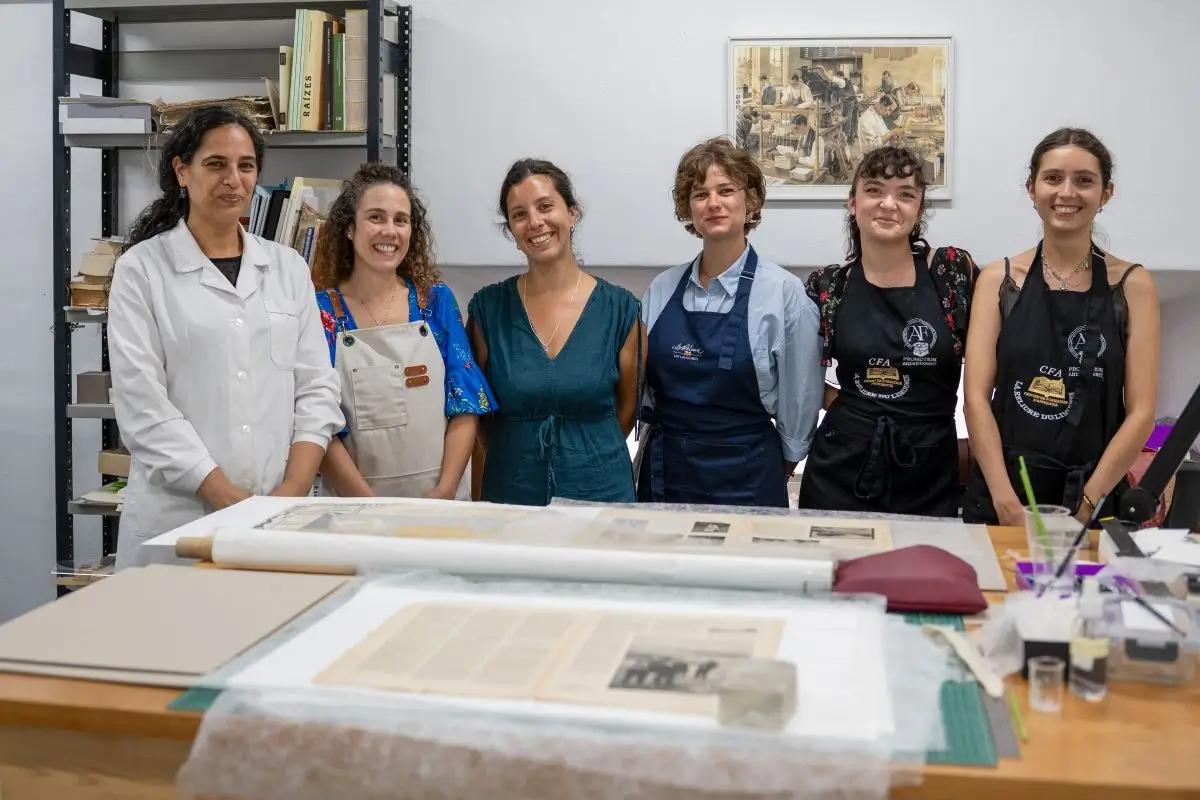
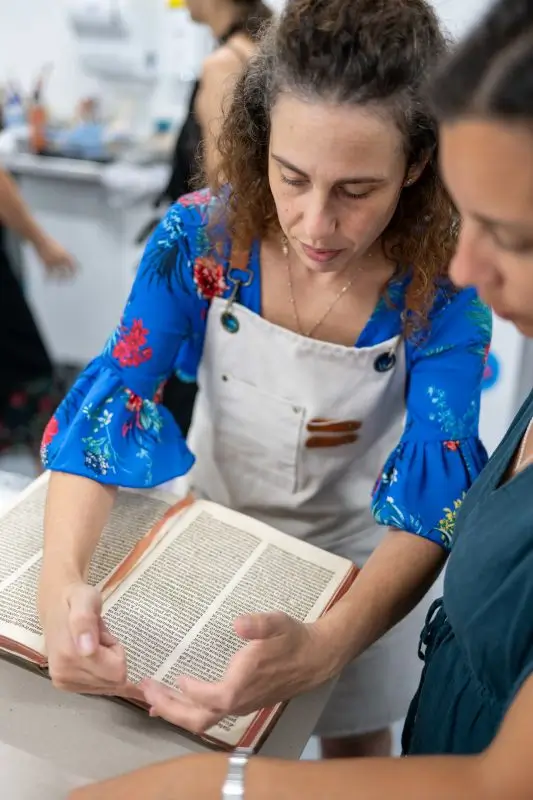
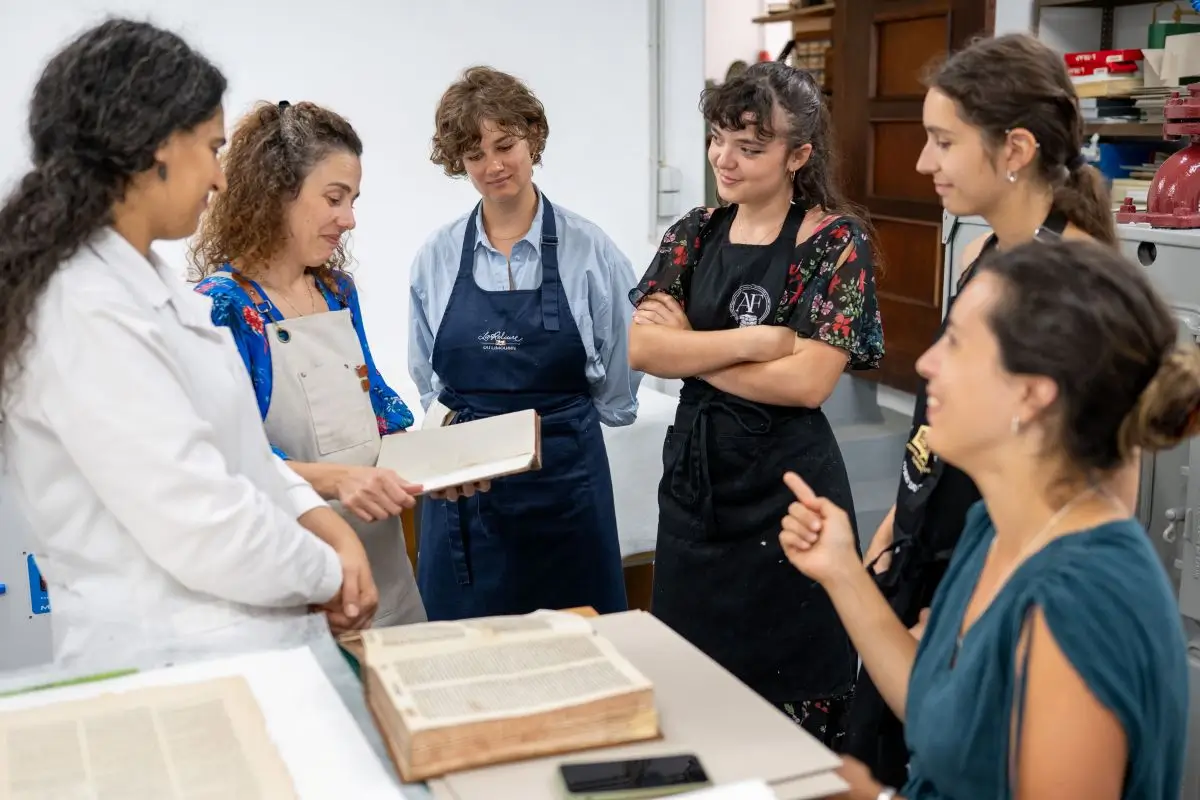
Carla, Ana Margarida, Head Conservators at the University, Paloma, Director of Studies, and students Justine, Prunelle and Andréa from the MEMORIST apprentice center
A prestigious library at the heart of the University of Coimbra
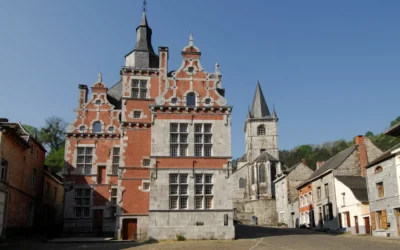
Founded in the 13th century, the University of Coimbra is one of the oldest universities in Europe in continuous operation. Partly established in the historic buildings of the former royal palace, it is home to the famous Joanina library, a true gem of Portuguese heritage.
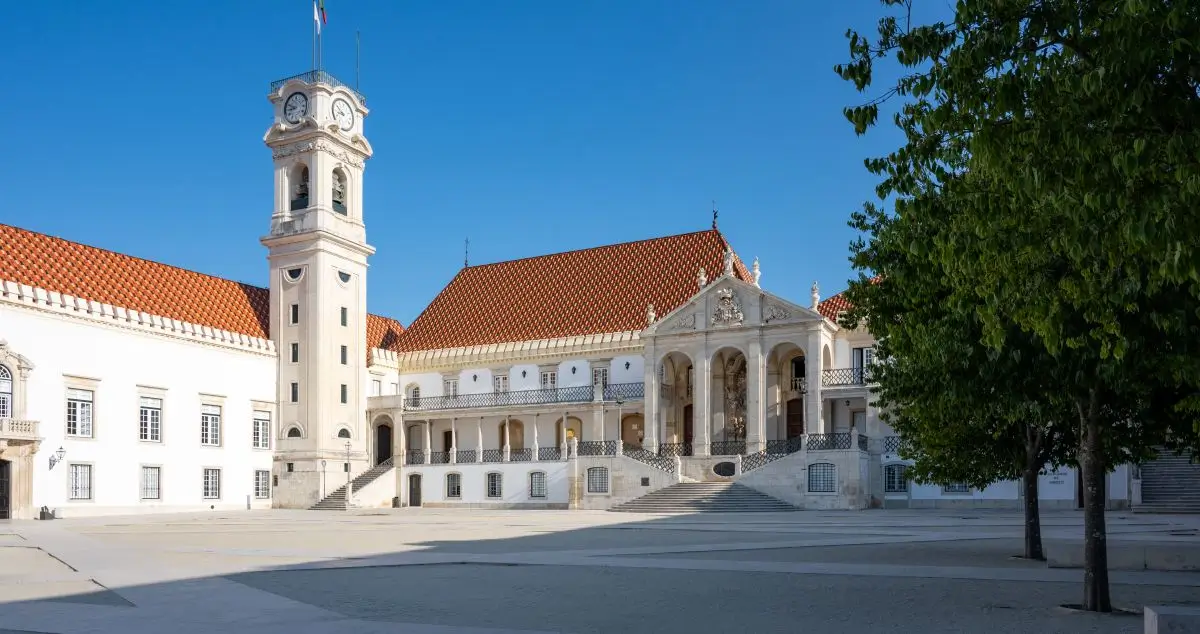
University of Coimbra
The students worked based in the building of the General Library, which houses the famous Joanina Library conservation studio.
The project focused on documents regularly requested for consultation. Conserving them would preserve their integrity while allowing researchers and readers to access them.
Training in heritage crafts with an international dimension
The MEMORIST CFA trains students in the profession of bookbinding and the conservation-restoration of written heritage. The training combines technical lessons and professional scenarios, so that students can learn the key skills and methods essential to the conservation of documents.
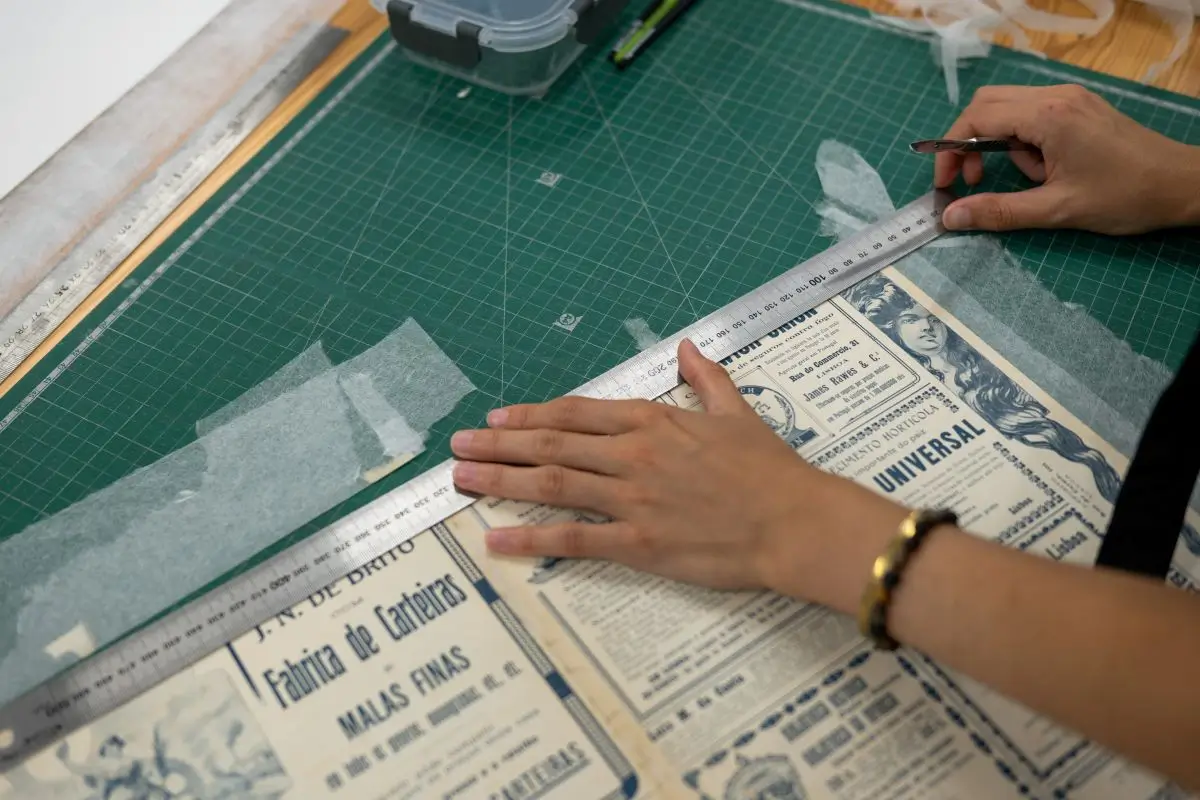
This exposure to fieldwork is also reflected through international projects. As part of this experience, students were divided into several working groups: one group travelled to Coimbra in Portugal, while another team went to Tunis to work on a private collection involving paper conservation and bookbinding.
These experiences give students the opportunity to deal with a variety of issues and working conditions, while discovering the demands of a professional project.
A collection of magazines from the early 20th century
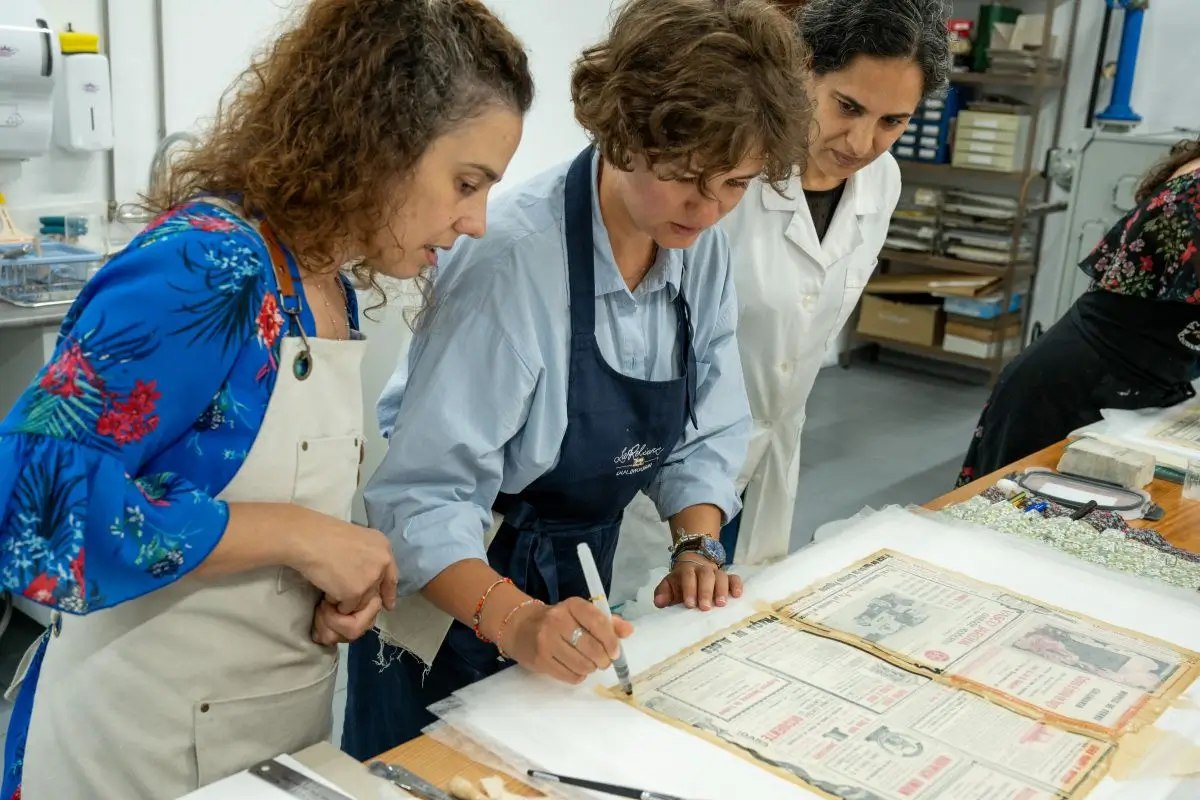
In Coimbra, the workshop focused on booklets dating from 1913. The CFA team separated the advertising sheets so they could be treated individually and to allow a restoration appropriate to their condition.
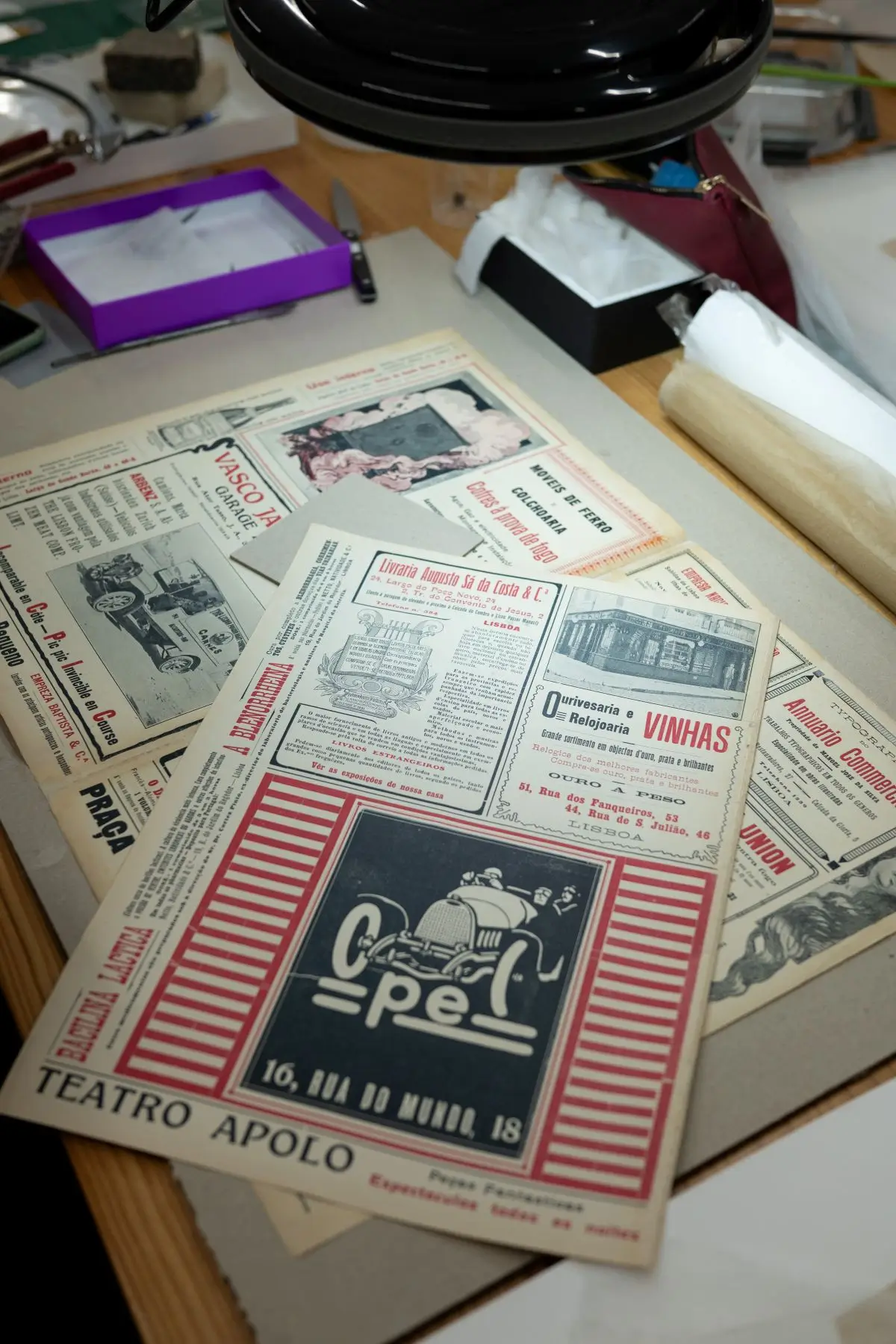
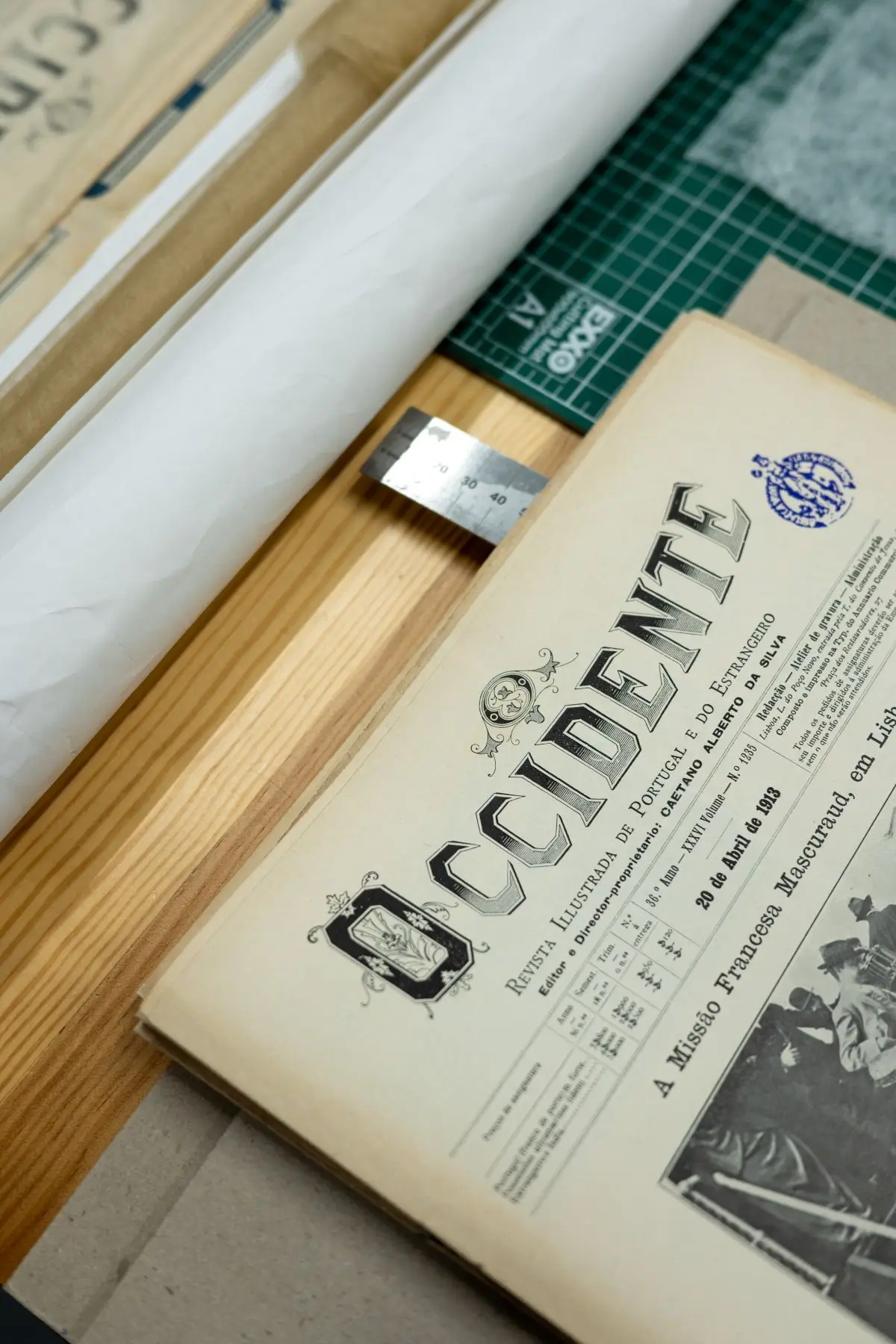
For the students, this work was a true professional immersion.
The first step: observe before intervening
Before any intervention, each document is subject to a detailed analysis known as a condition report. This step is essential: restoration does not simply mean repairing a document, but understanding its condition, its materials and the deterioration it has undergone so as to determine the most appropriate treatment.
In particular, the conservators look at:
- the format of the document;
- the general state of the paper;
- the presence of images;
- tears and their location;
- cases requiring more complex treatments.
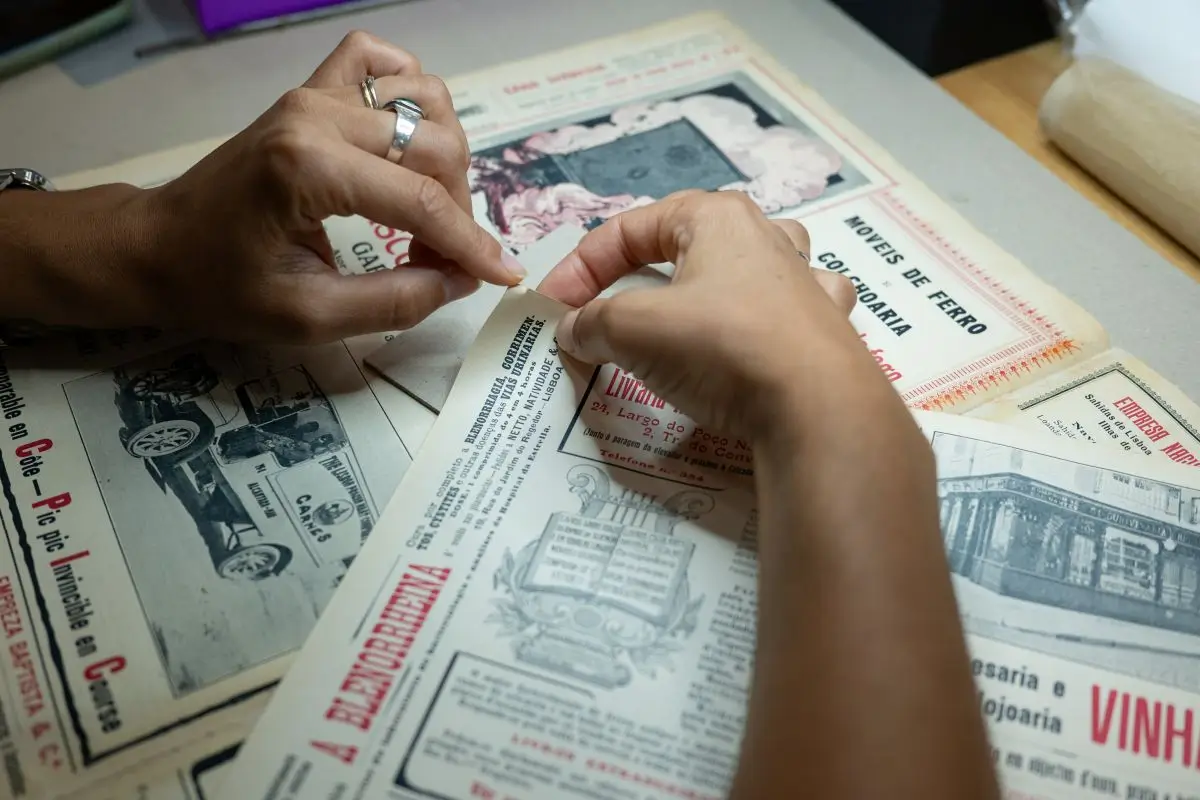
Particular attention is paid to the inks and images: indeed certain interventions require that their response to moisture or the different treatments is verified beforehand to prevent any migration or deterioration.
Clean, treat and consolidate
Once the diagnosis has been established, the documents move onto the different treatment stages.
Work begins by removing dust and cleaning. Depending on the condition of the paper, some sheets may then be treated in a bath with a sequence of warm water then cold water.
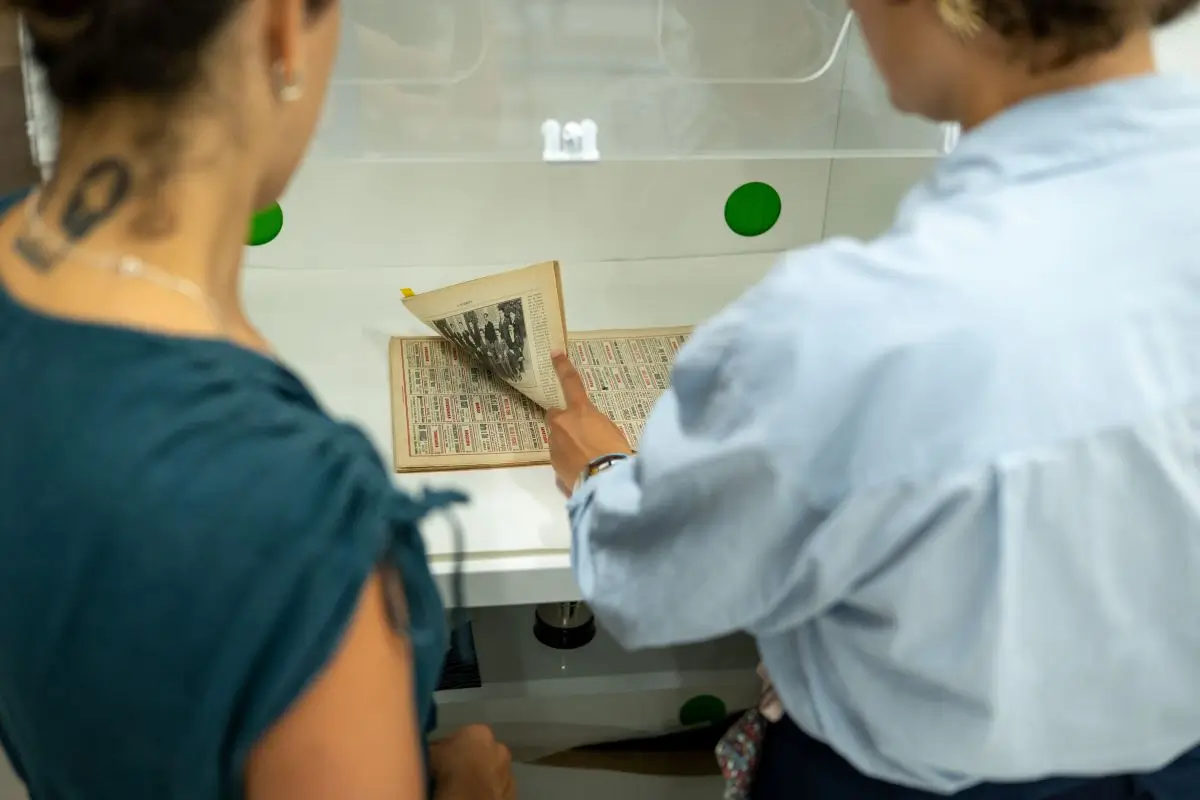
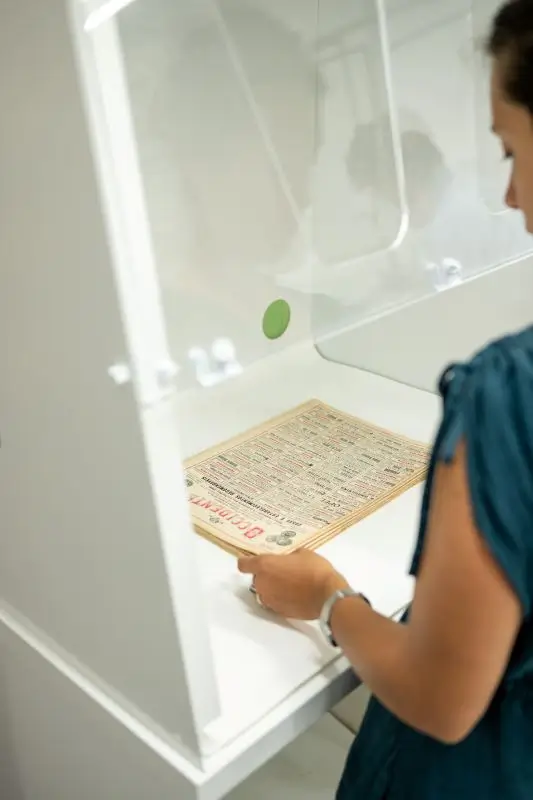
Fume hood – Solvent safety enclosure
An alcohol-based mixture may be sprayed to help with the cleaning of some documents, but this step should be carried out carefully to ensure that the inks remain stable and prevent any transfer or loss of colour.
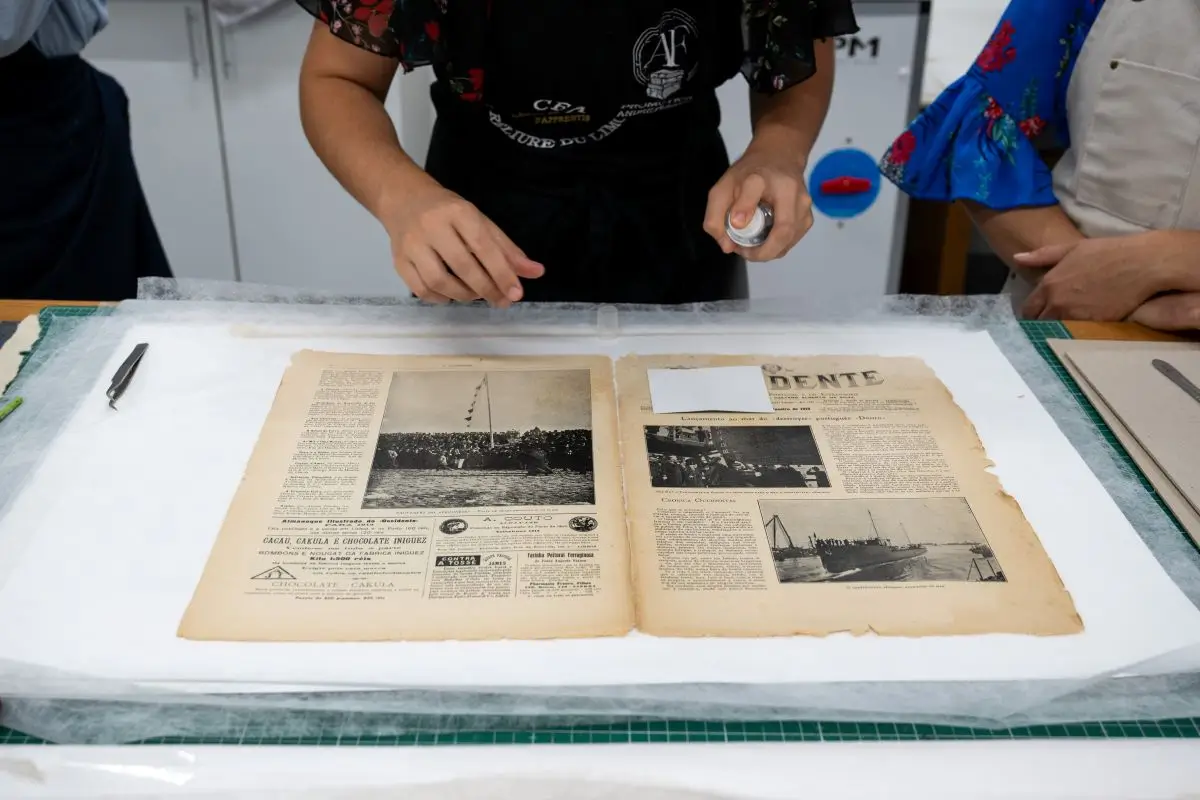
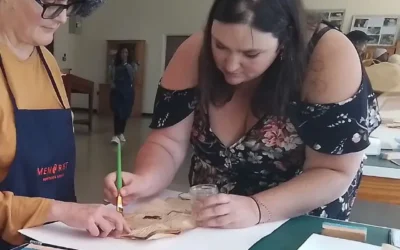
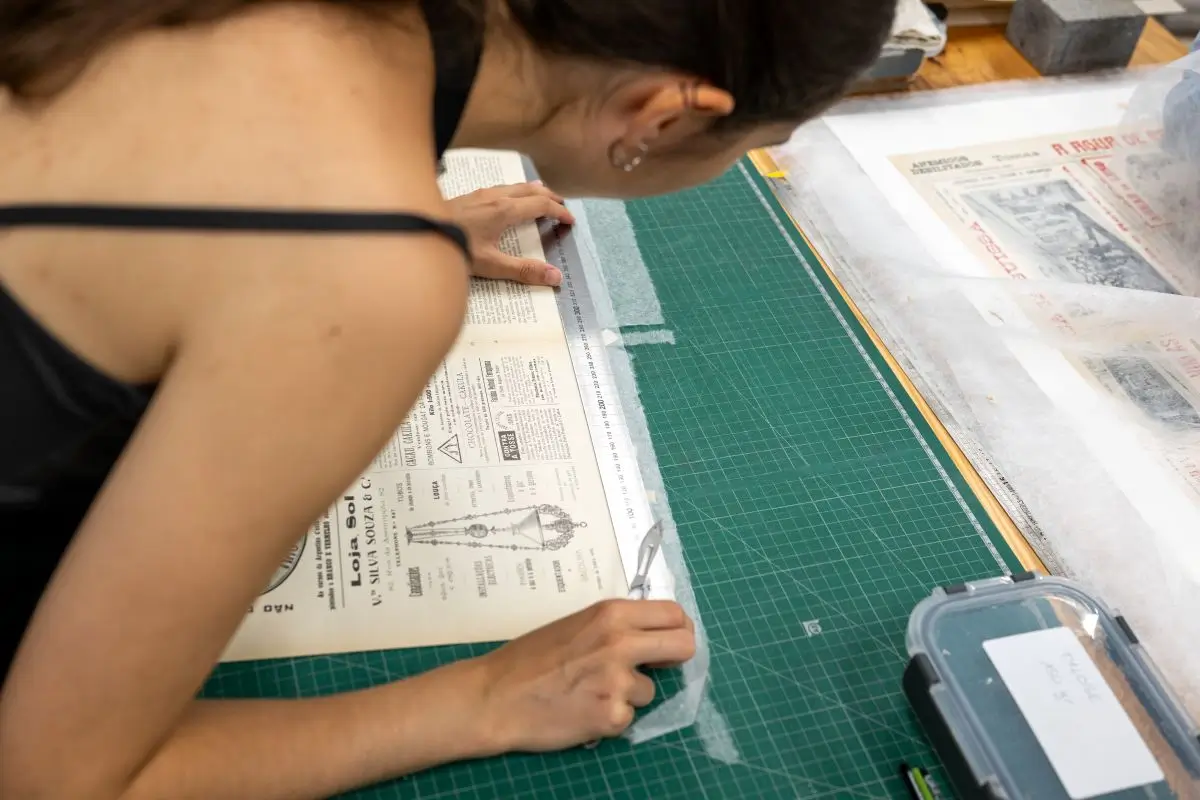
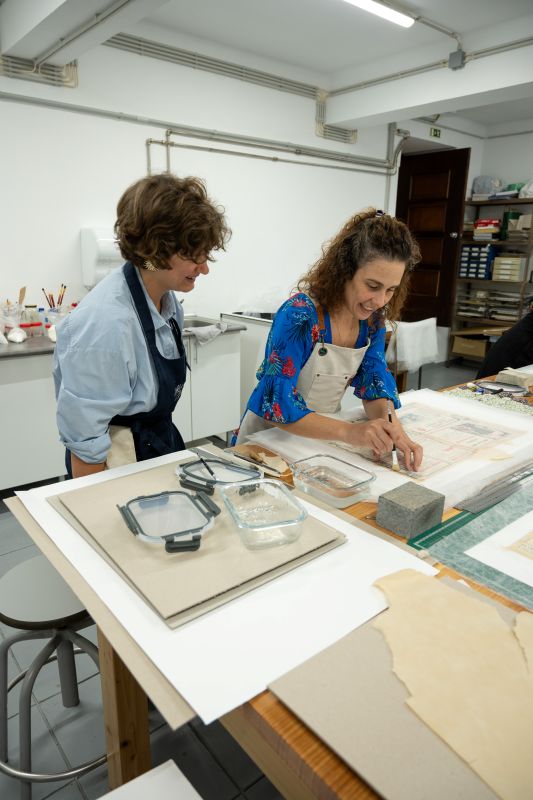
The conservators then fill holes and repair tears using Japanese tissue paper. At the client’s request, this is tinted with coffee to make it closer to the colour of the document. Students are shown the technique by the conservators from Coimbra.
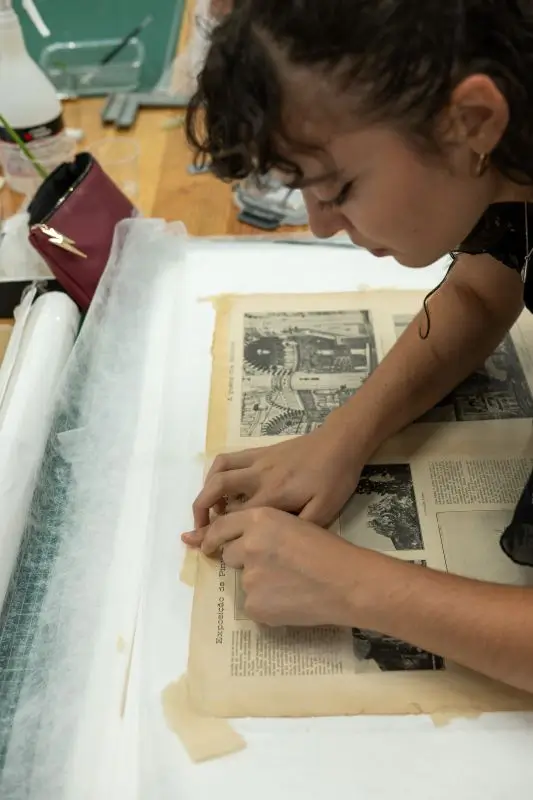
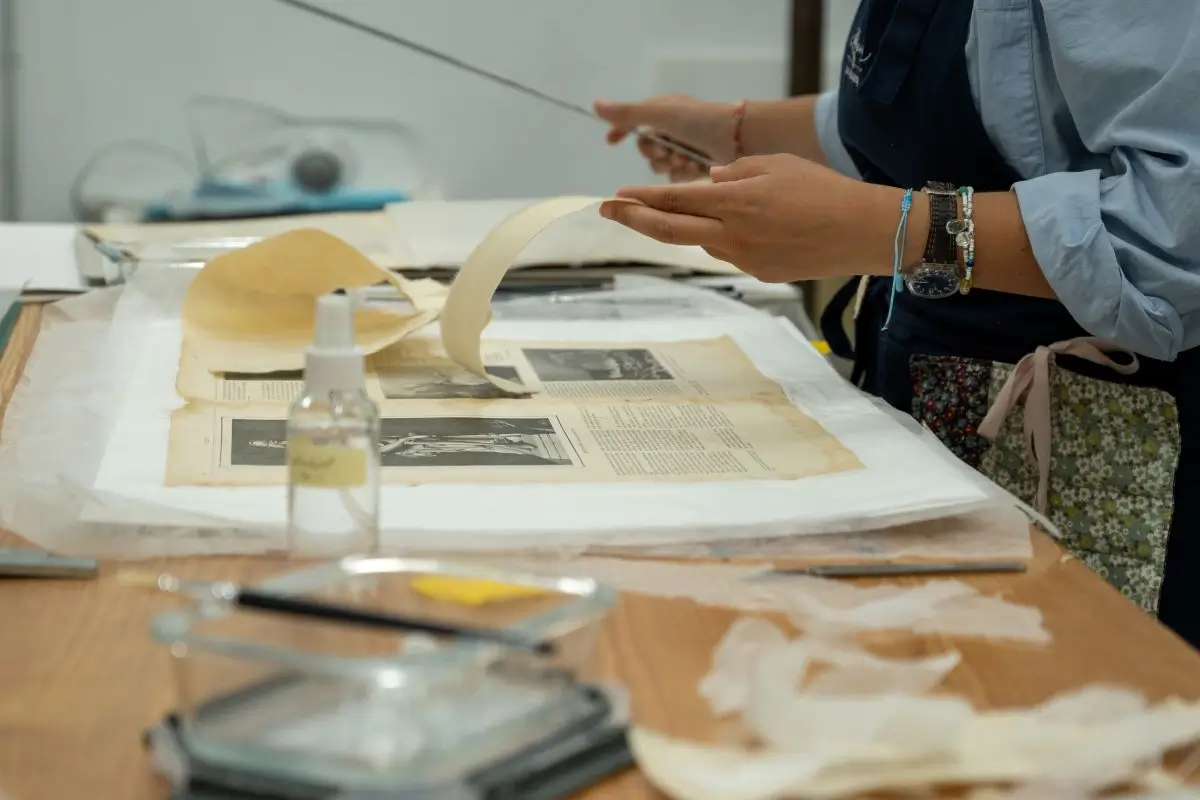
To prevent the materials sticking together, they use non-woven fabric.
Blotting paper is used to control and gradually absorb moisture.
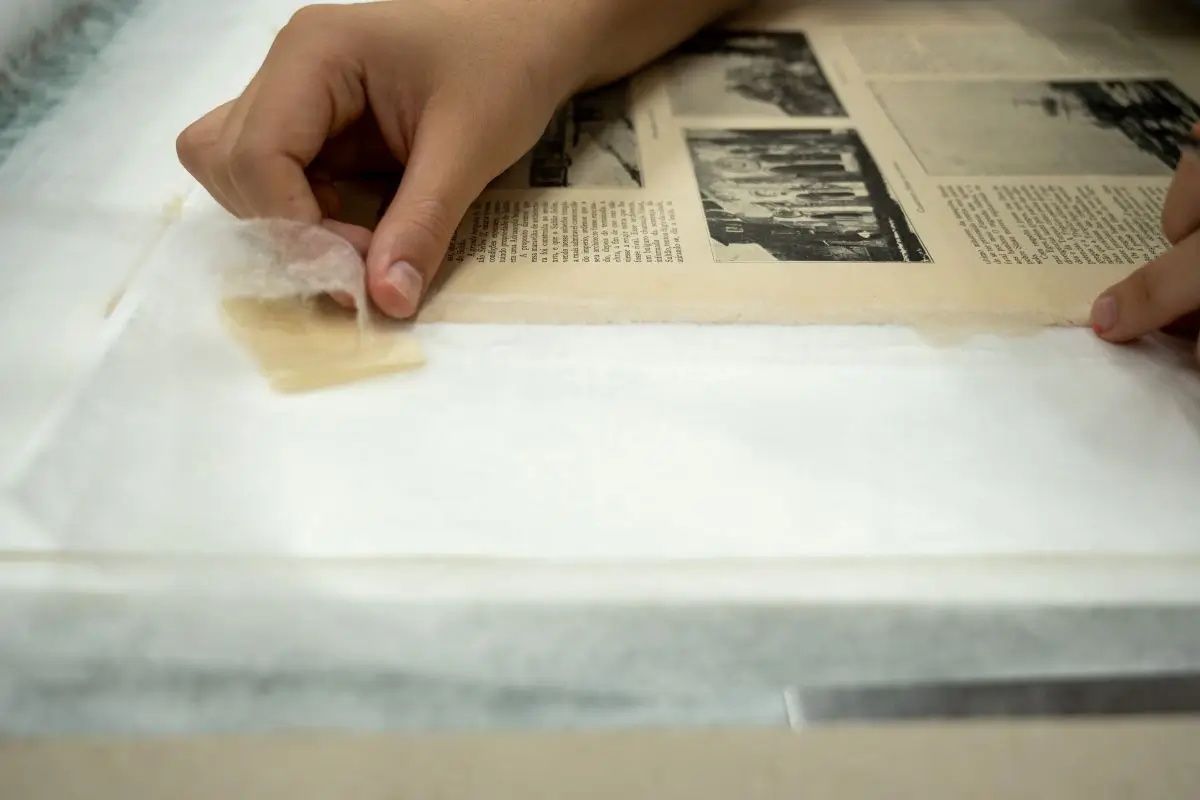
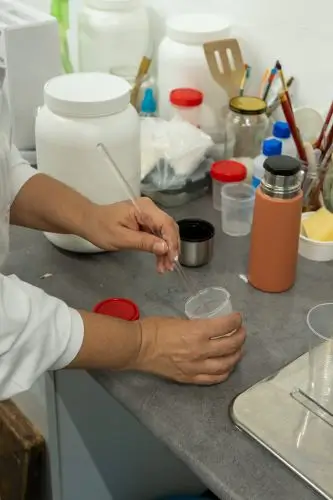
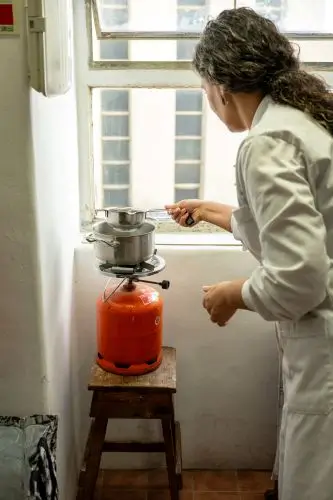
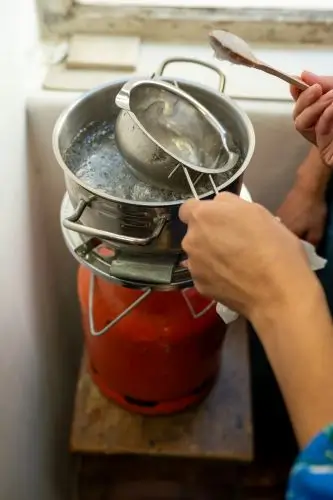
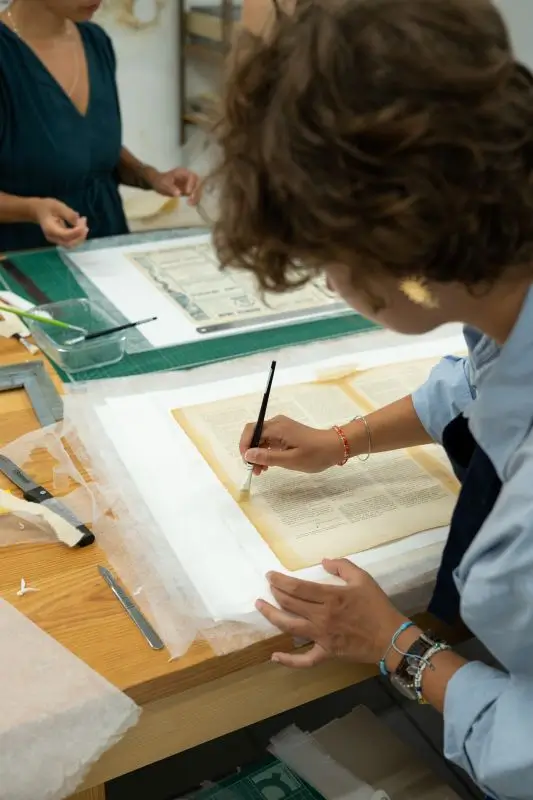
Three types of adhesive were used during restoration: starch paste, prepared on site approximately every three days, alcohol-based Klucel G, and Tylose. Each one has specific properties and responds to different requirements for paper restoration, complying with the principle of reversibility of interventions.
The conservators must also deal with the irregularities of old documents. For example, one page could be shorter than the others, requiring a suitable intervention that respects both the document and its structure.
Each action must therefore be considered depending on the document treated.
Practical experience for future conservators
On site, Paloma Errecaborde, CFA’s Educational Coordinator, supported the students throughout the project and carried out the final check of the interventions undertaken. A key stage for checking the quality of the work and ensuring that the restorations comply with the project requirements, of which she is guarantor.
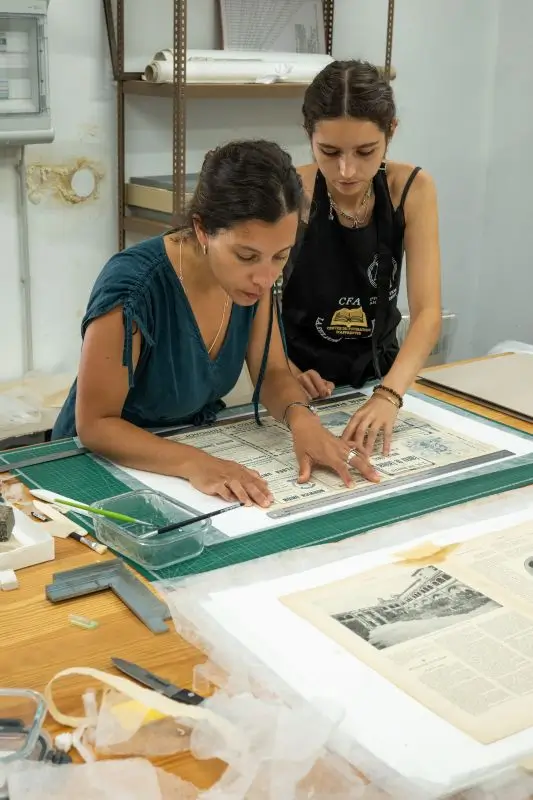
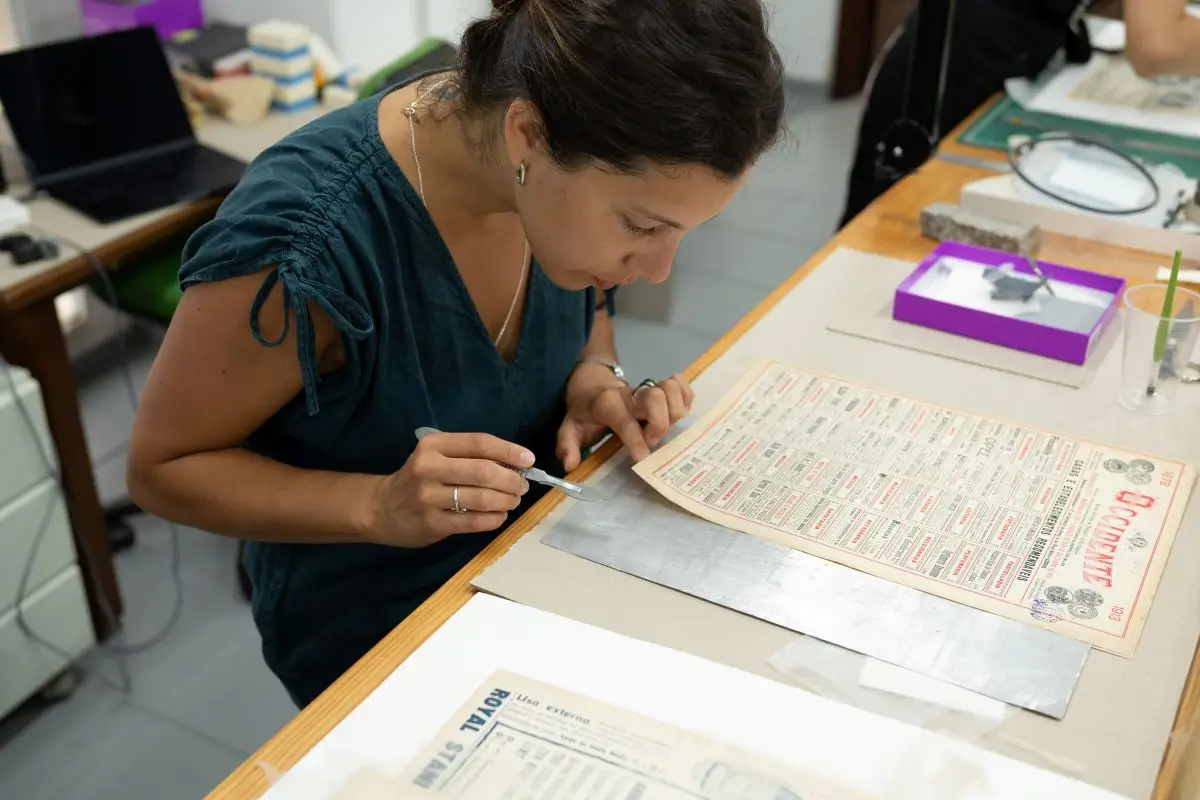
Alongside them, Carla and Ana Margarida, Head Conservators observed the different stages of the project and provided their professional perspective on the work.
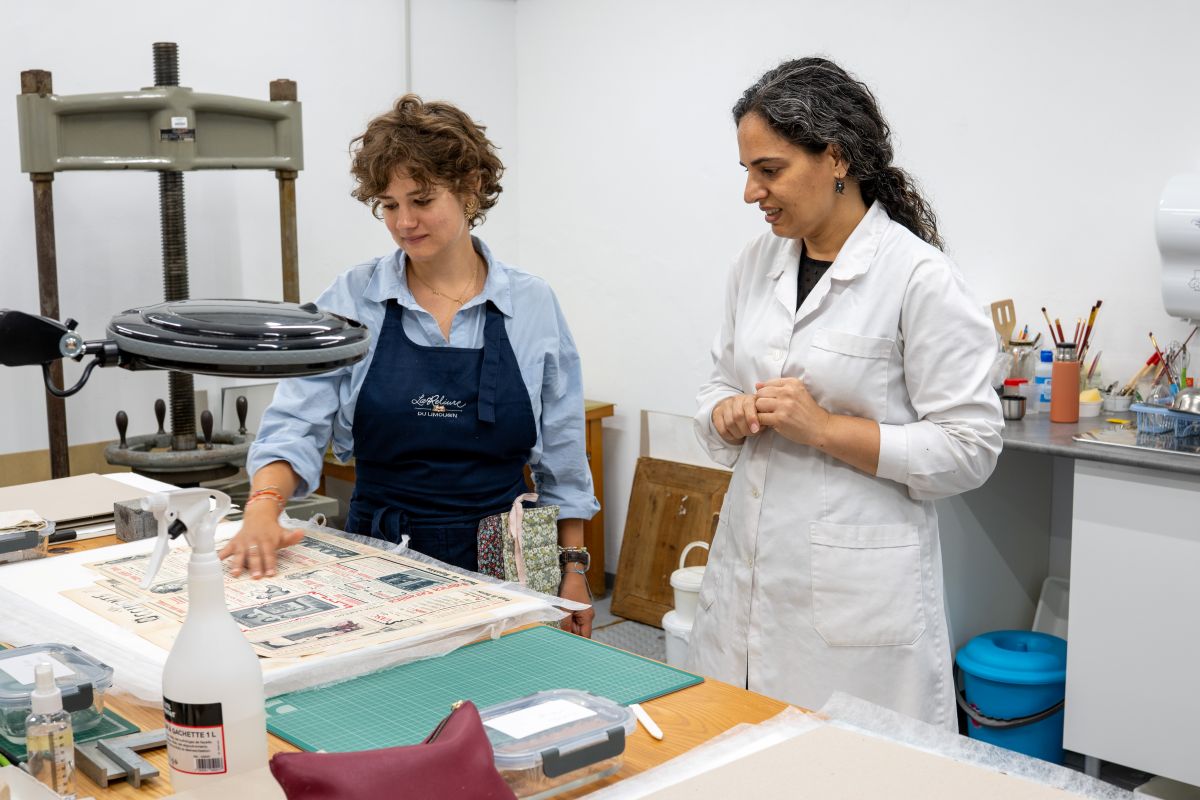
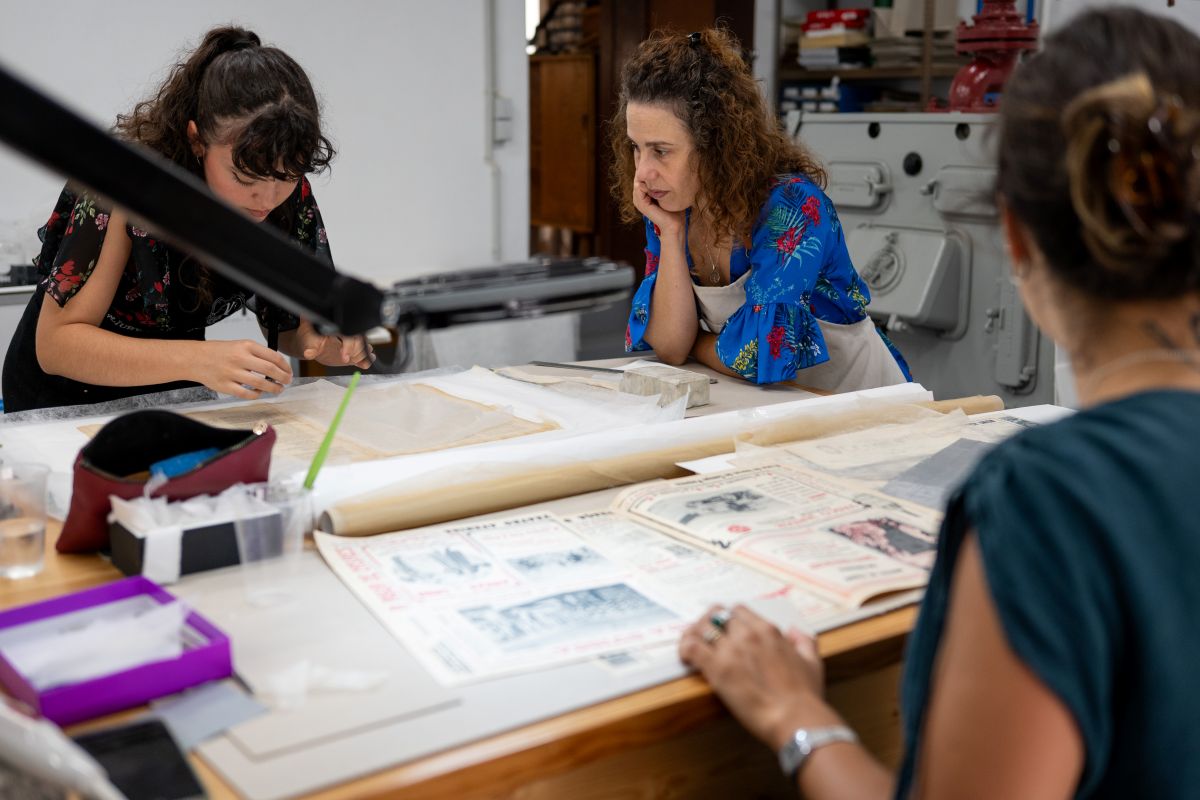
An exchange of expertise
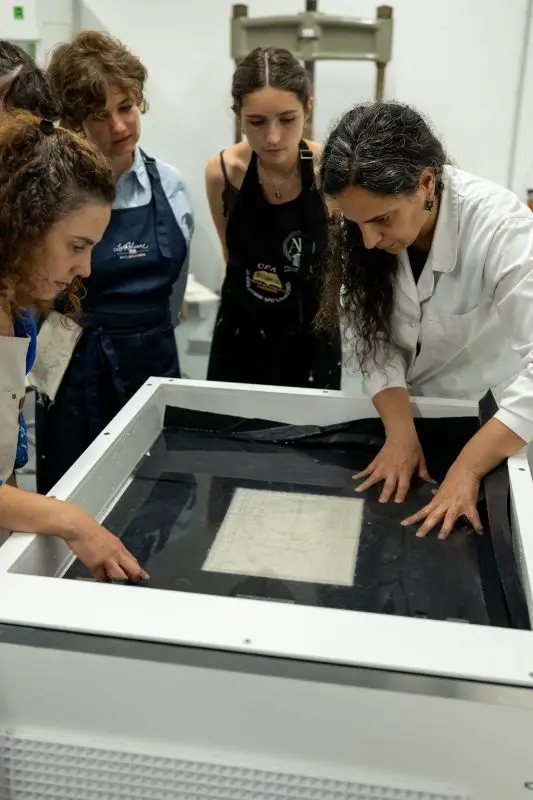
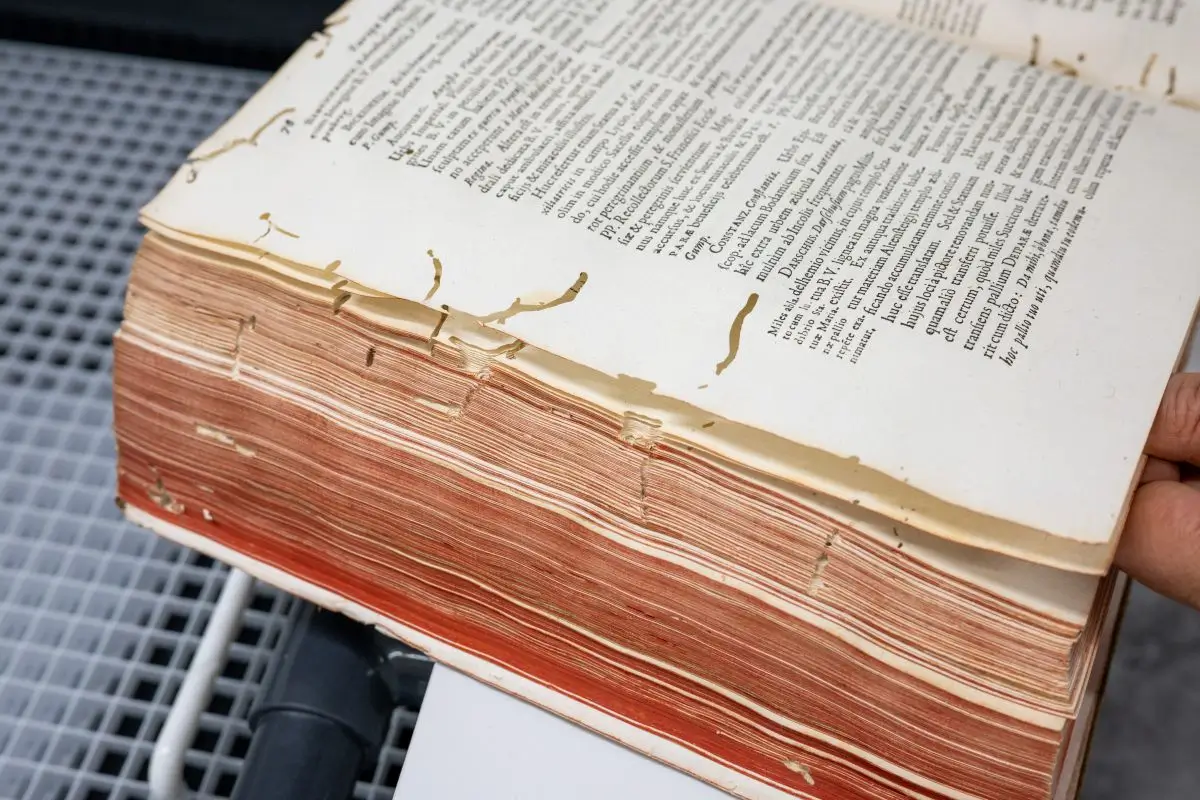
In addition to the restoration workshop, these ten days were also the opportunity for a genuine exchange of expertise and knowledge. The conservators from Coimbra shared their techniques with the students, particularly through a demonstration of the leafcasting machine used to fill holes and tears in paper. They also presented works featuring various types of damage, especially that caused by insects. The students were then able to present the techniques and practical skills acquired during their training.
This experience in Coimbra therefore enabled the students to put their knowledge into practice in a professional environment, while discovering other conservation-restoration approaches. A workshop that was also a chance to share techniques, experiences and expertise around a single profession: that of preserving the documents entrusted to us.
Thank you to the General Library of the University of Coimbra and the conservators Carla and Ana Margarida for this exceptional opportunity.